Fabric Health
Fabric Health is a care enablement platform that equips health systems with a suite of white-labeled digital tools to care for patients wherever they are.
Scope
Client
Year
/
Challenge
(01)
Tackling fragmentation in a scaling ecosystem.
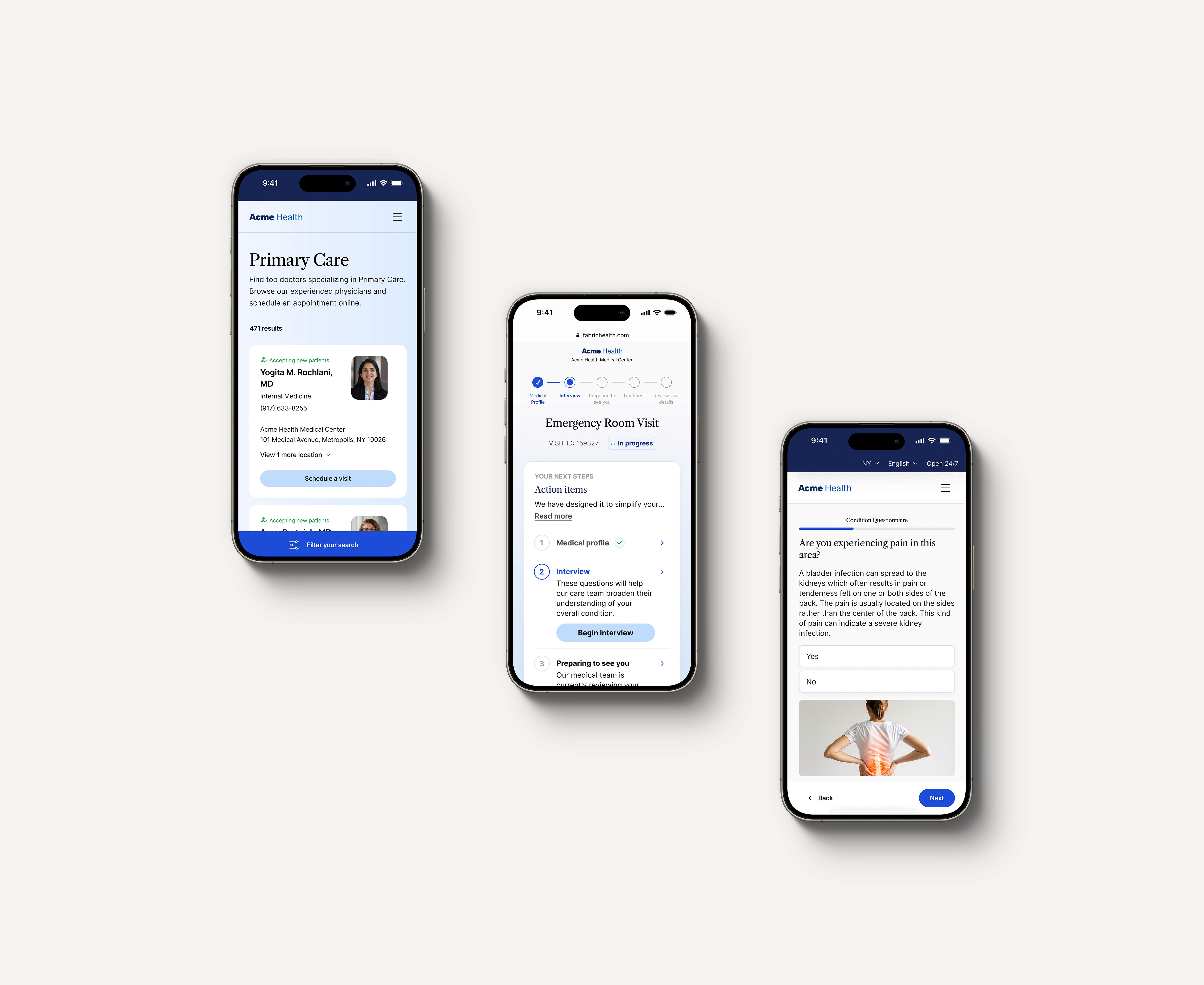
Fabric Health's product portfolio expanded from a single product—the Emergency Room Guide (ERG)—into a multifaceted ecosystem spanning three areas:
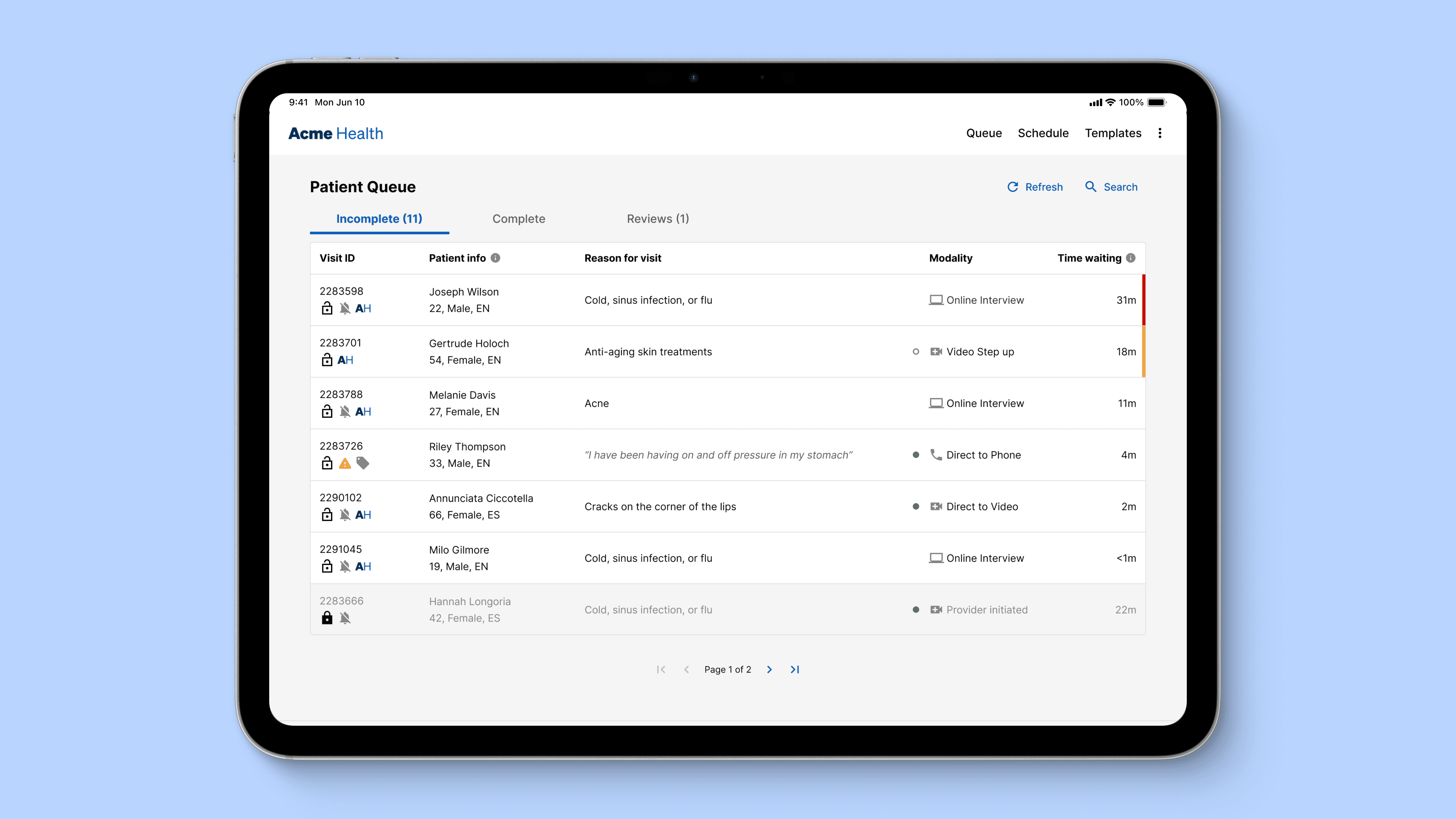
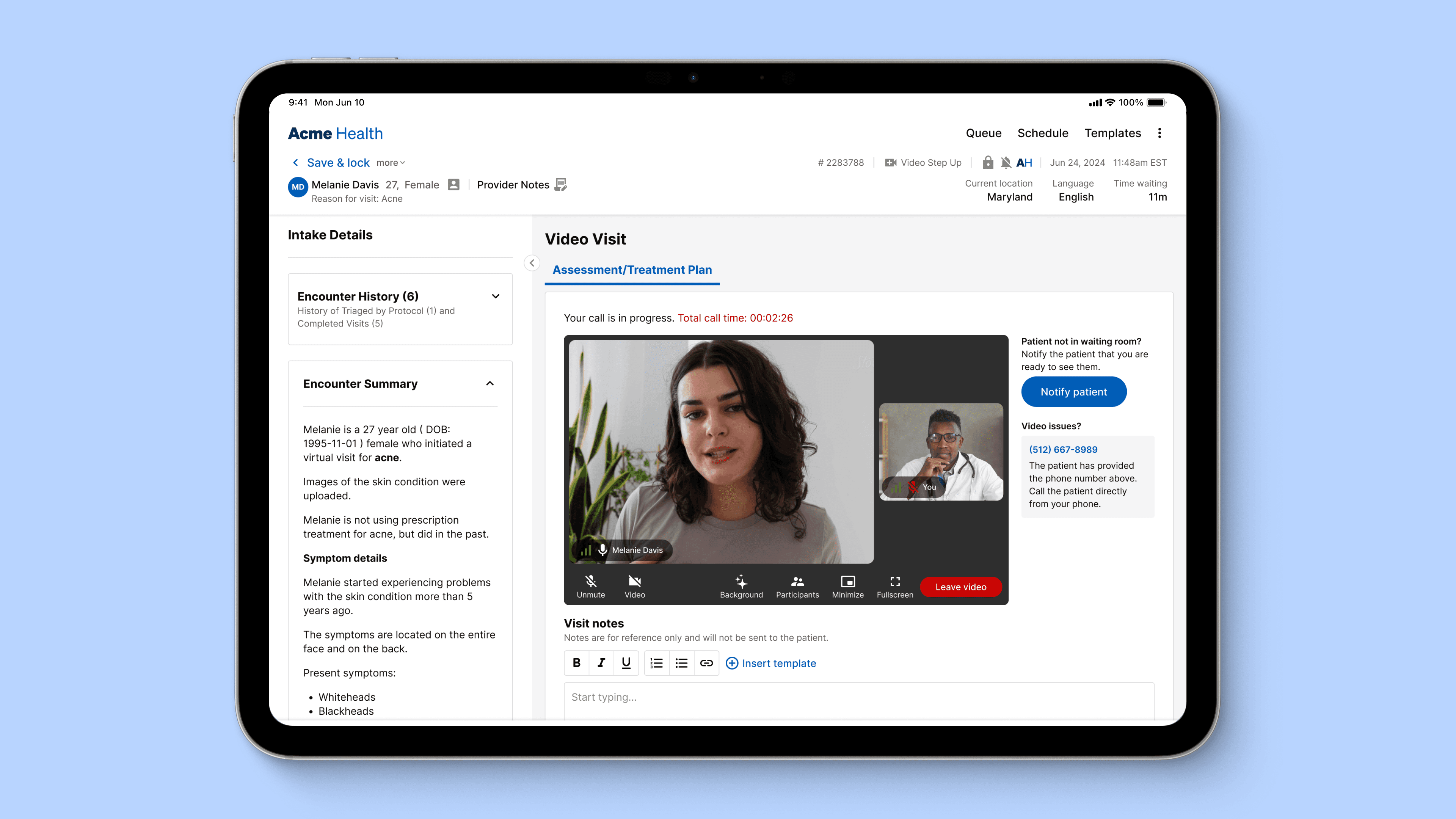
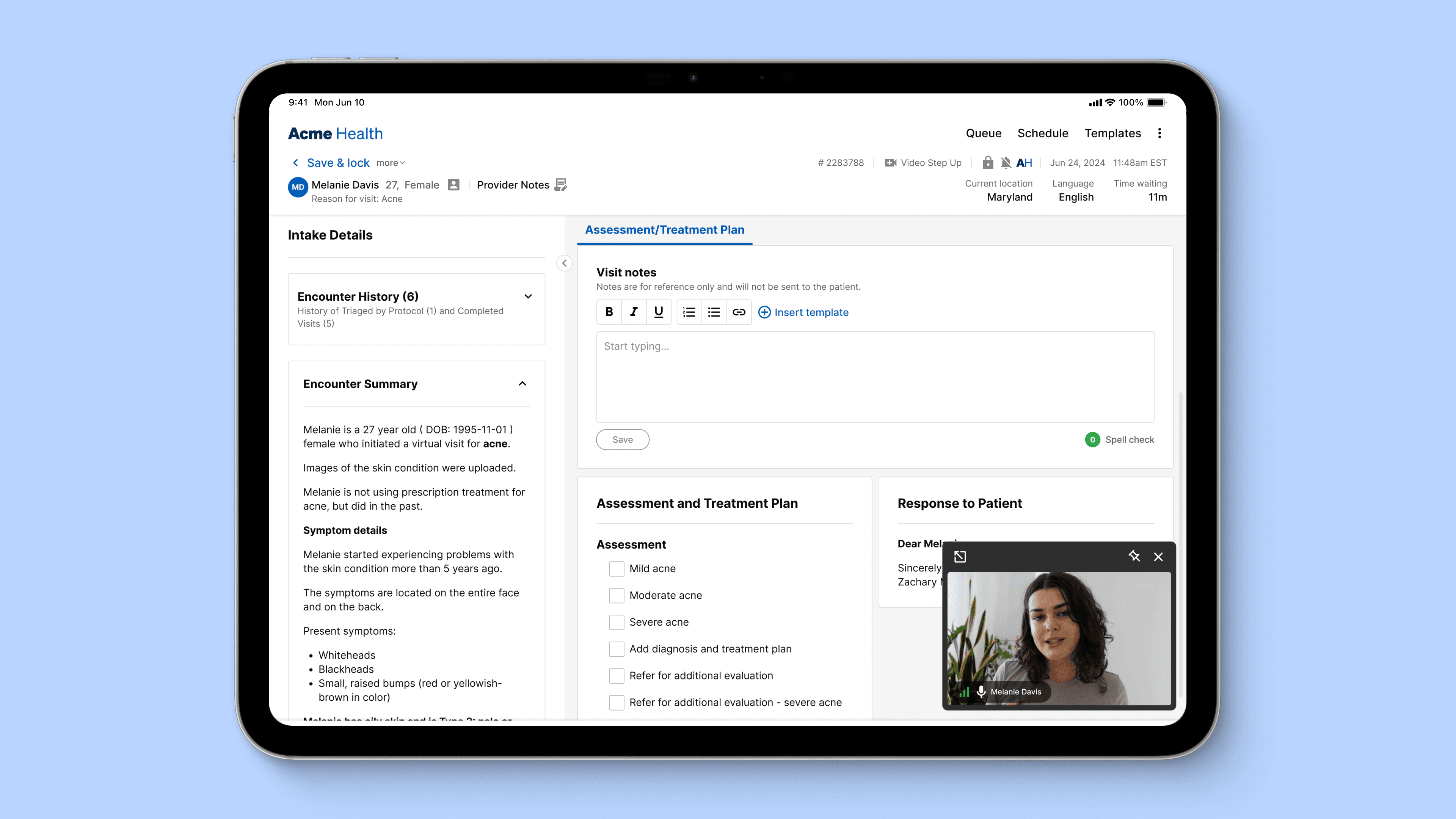
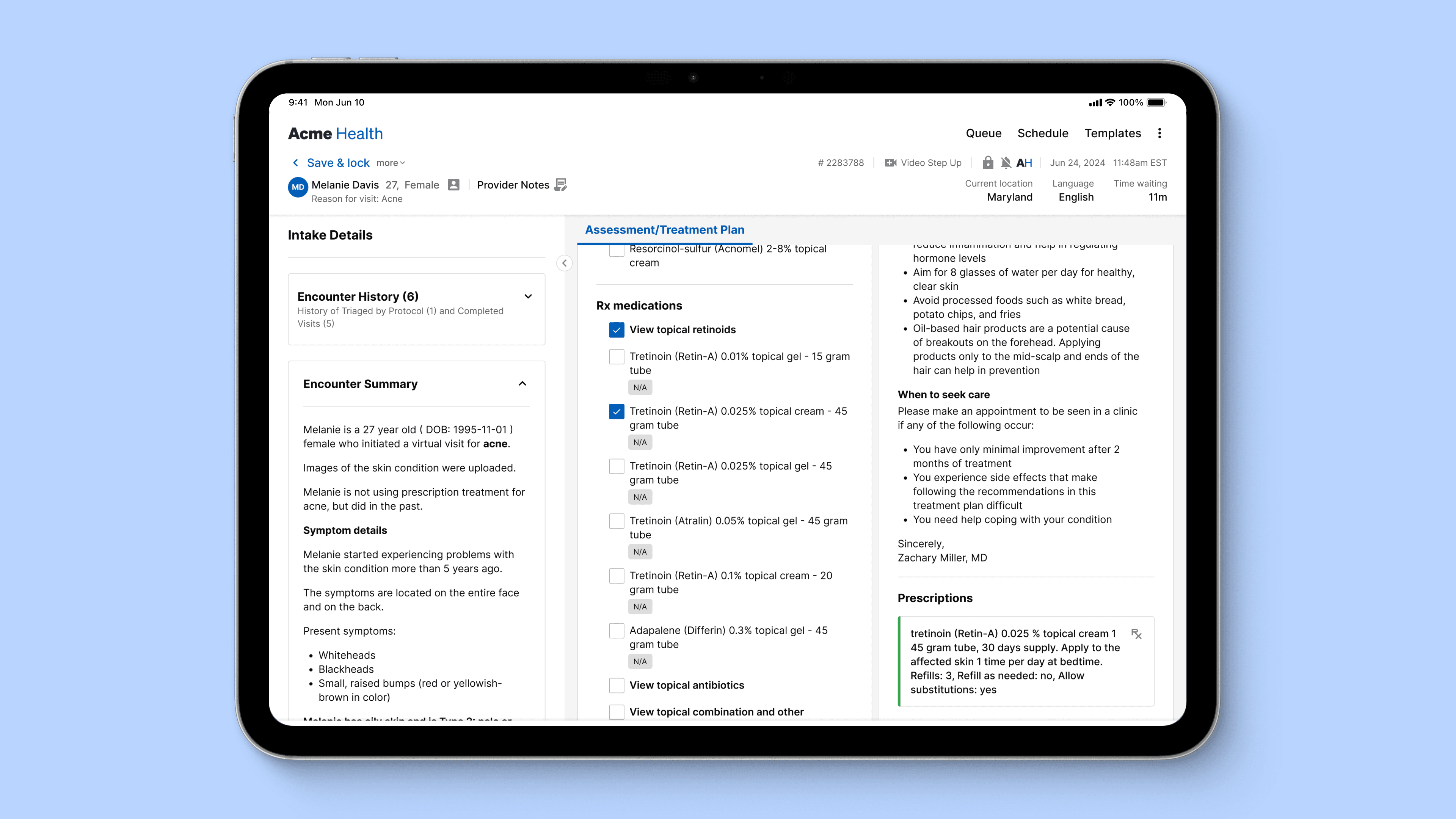
Virtual Care Platform (Zipnosis)
Two separate apps (Patient and Provider) facilitating synchronous and asynchronous on-demand care. The work covered design system updates, a UI revamp tied to a frontend refactor, new features like behavioral health and labs, and a white-label system.
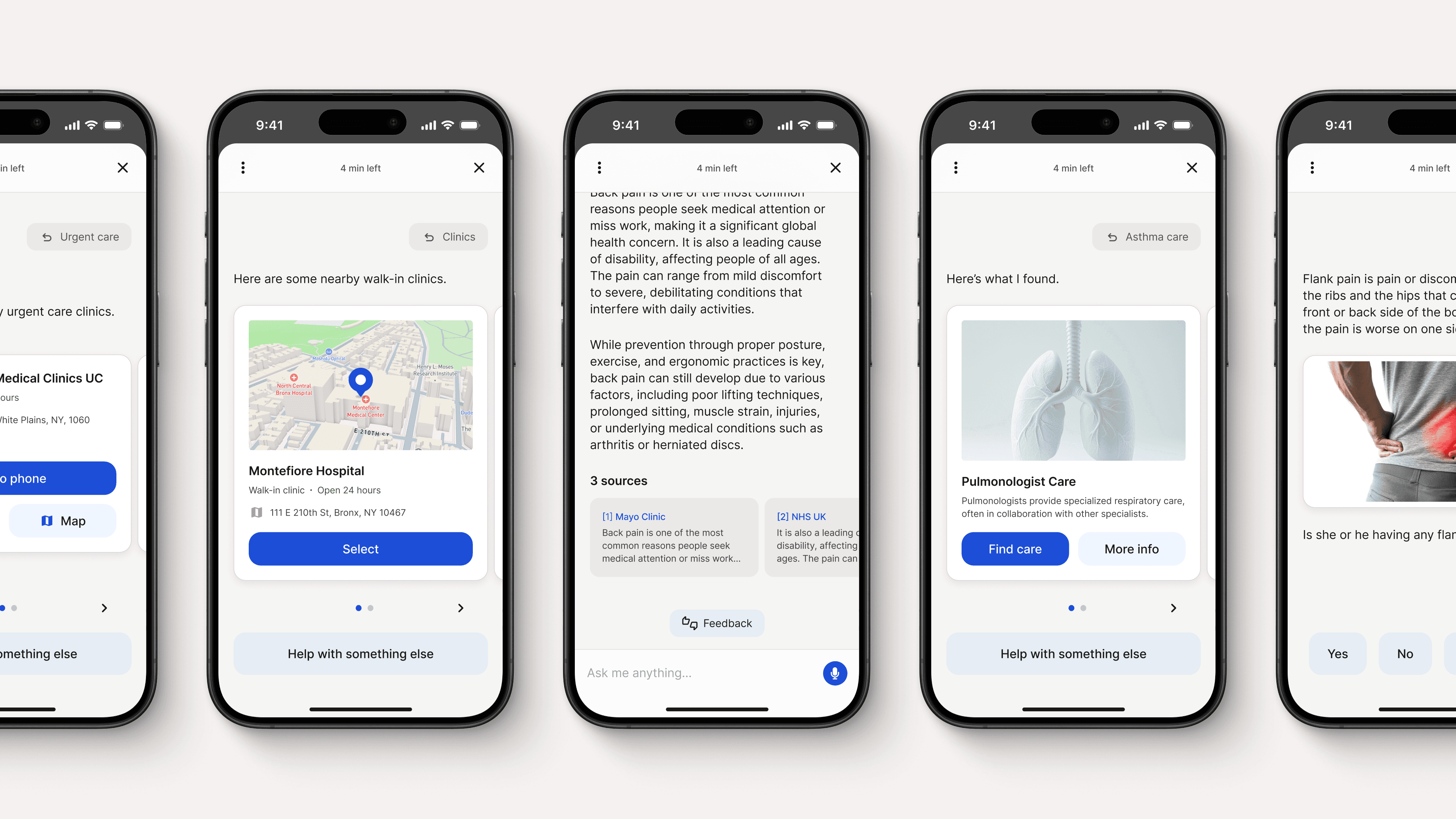
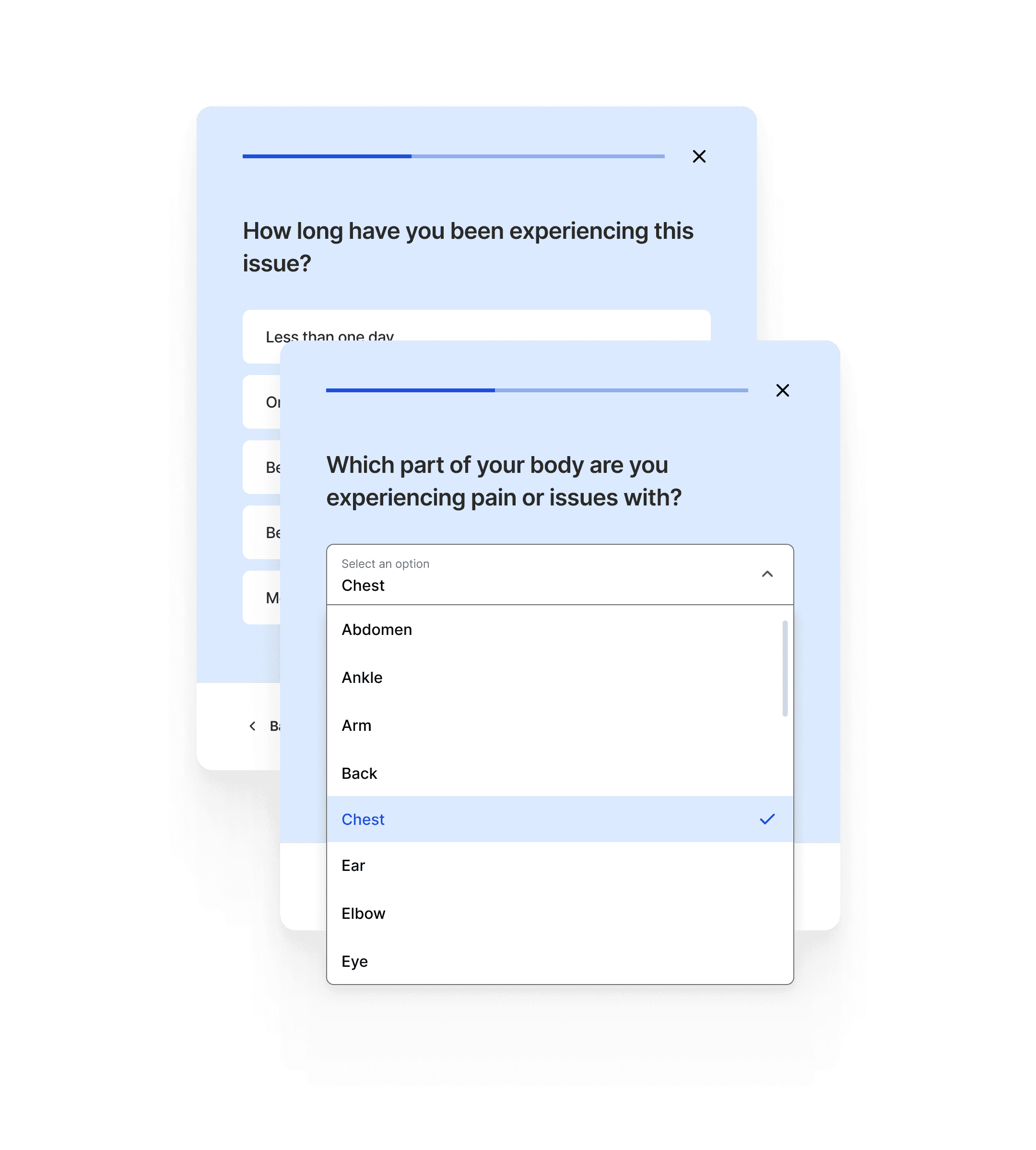
Engagement Suite (GYANT)
A message-based AI tool originally built for linear, mobile-first interactions with limited scalability. Work included a component audit, integration of chat/LLM best practices into UX copy, and unification of medical imagery styles via AI generation.
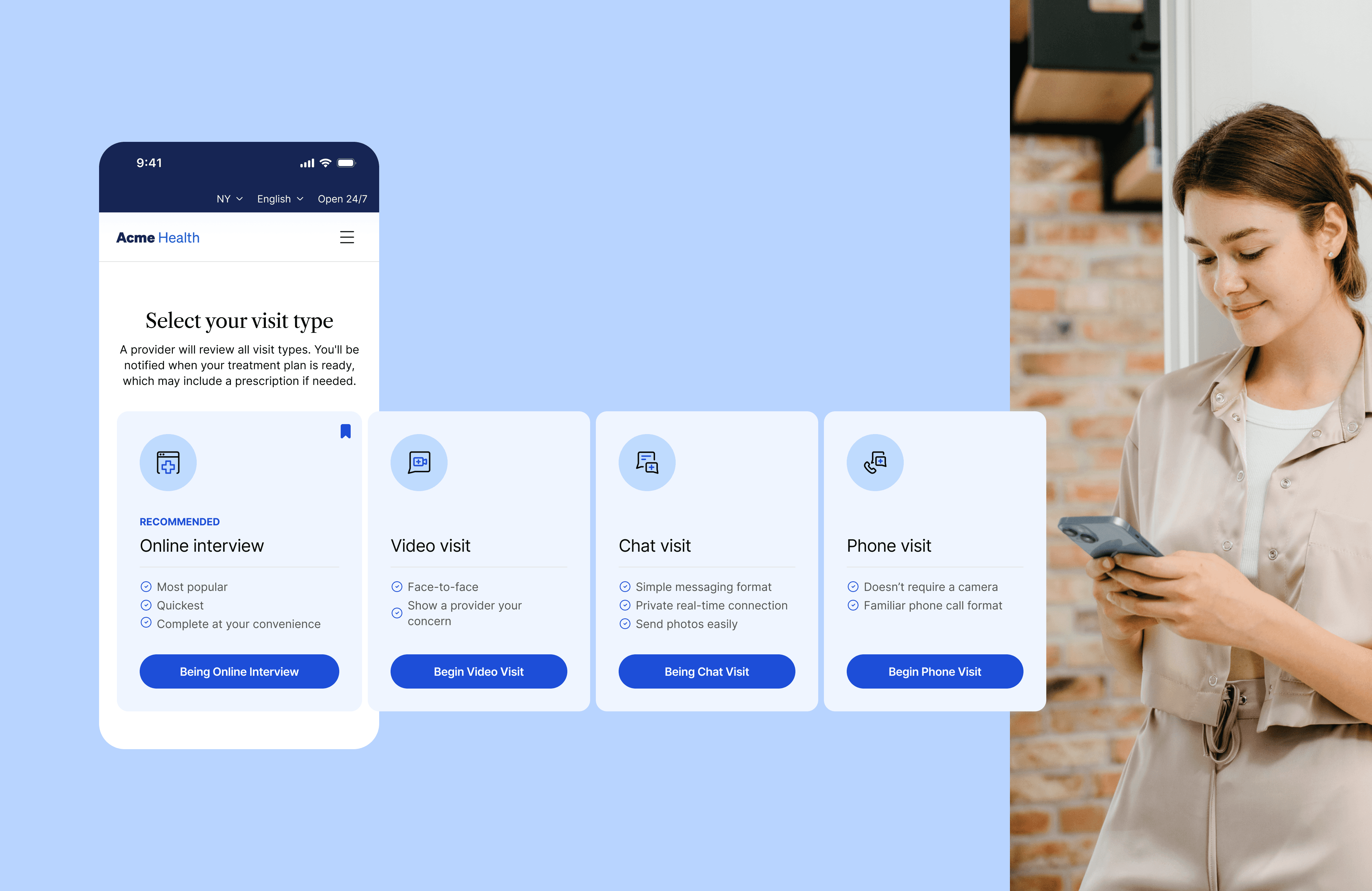
Provider Directory & Scheduling
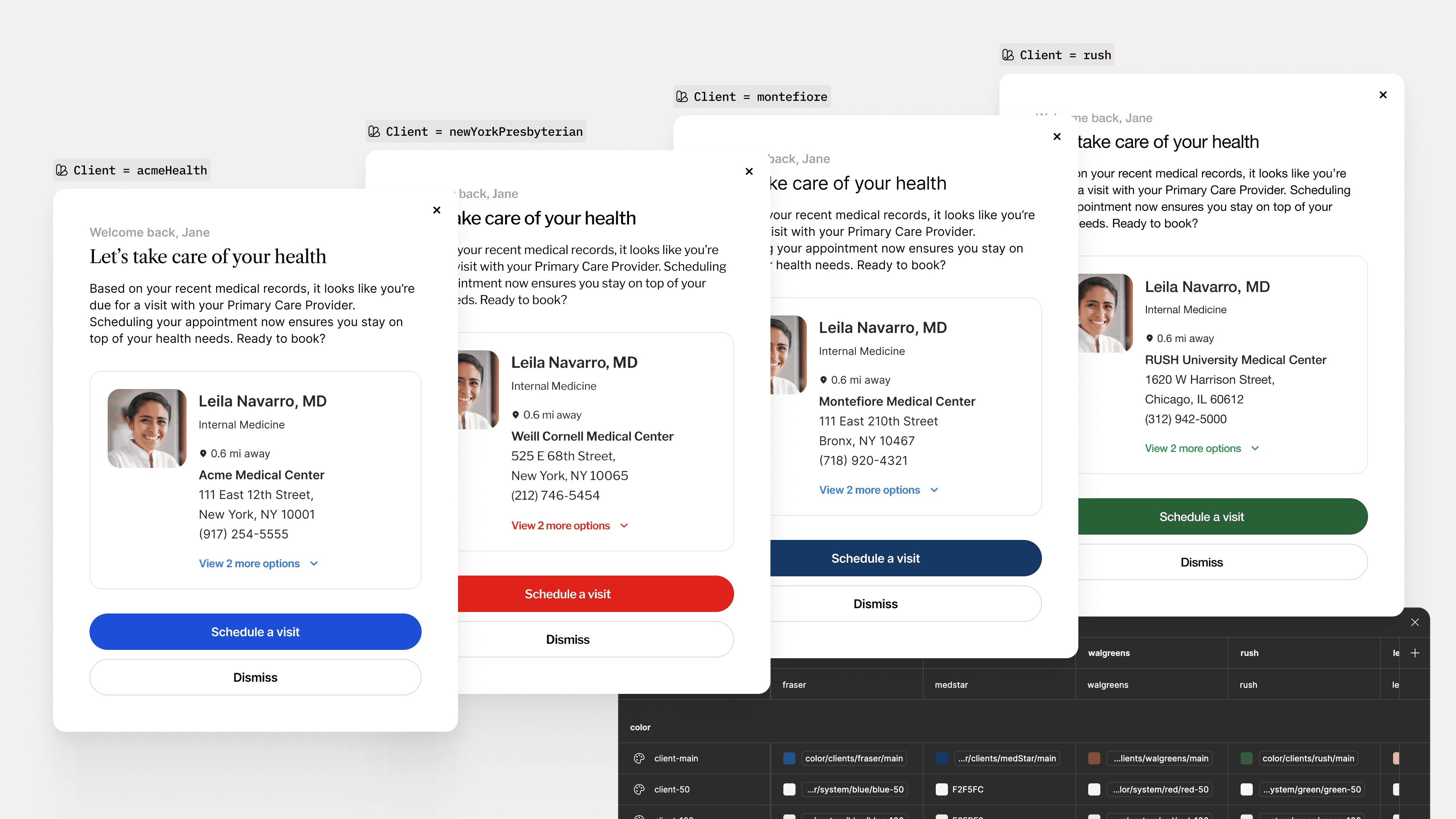
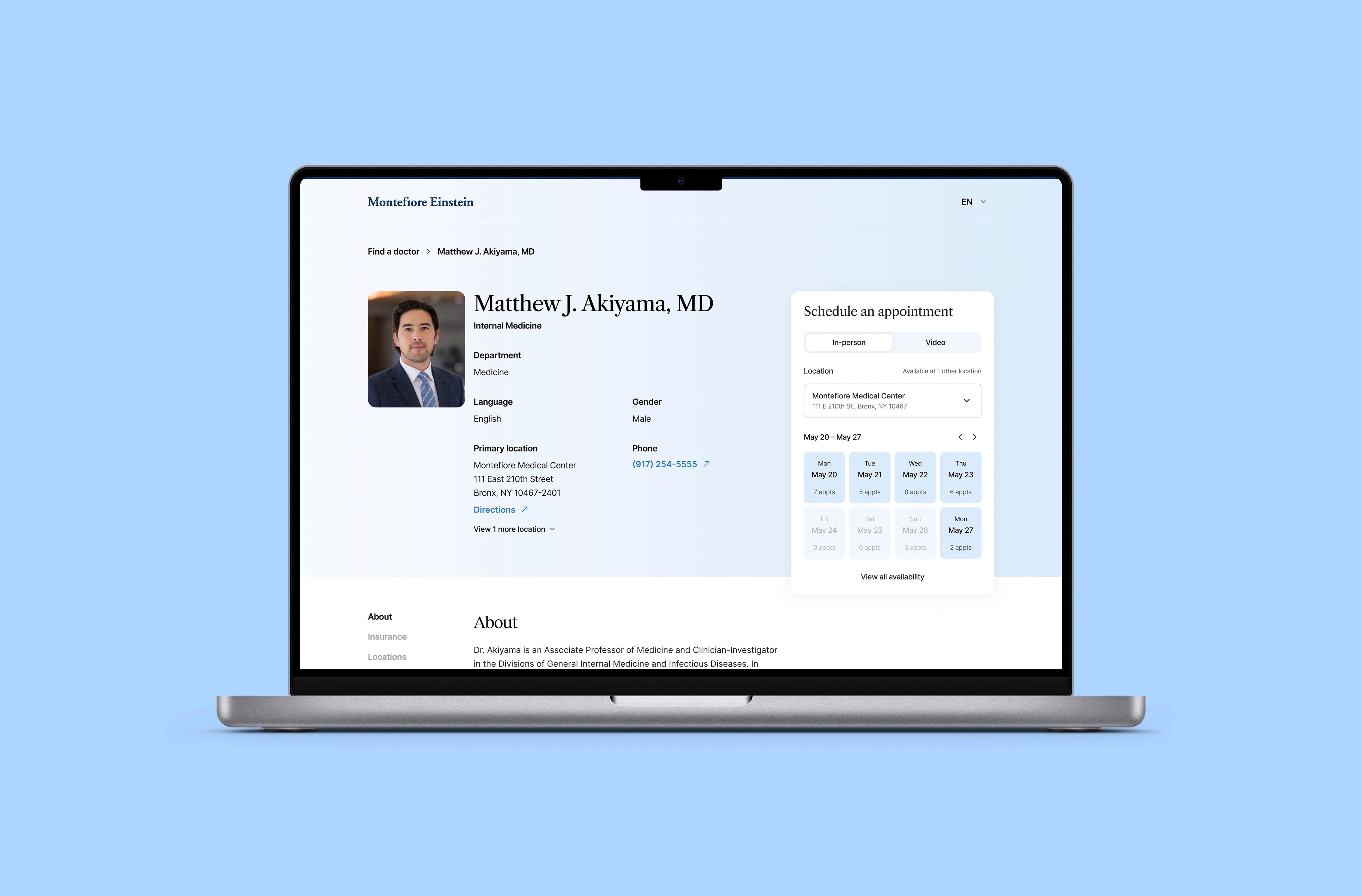
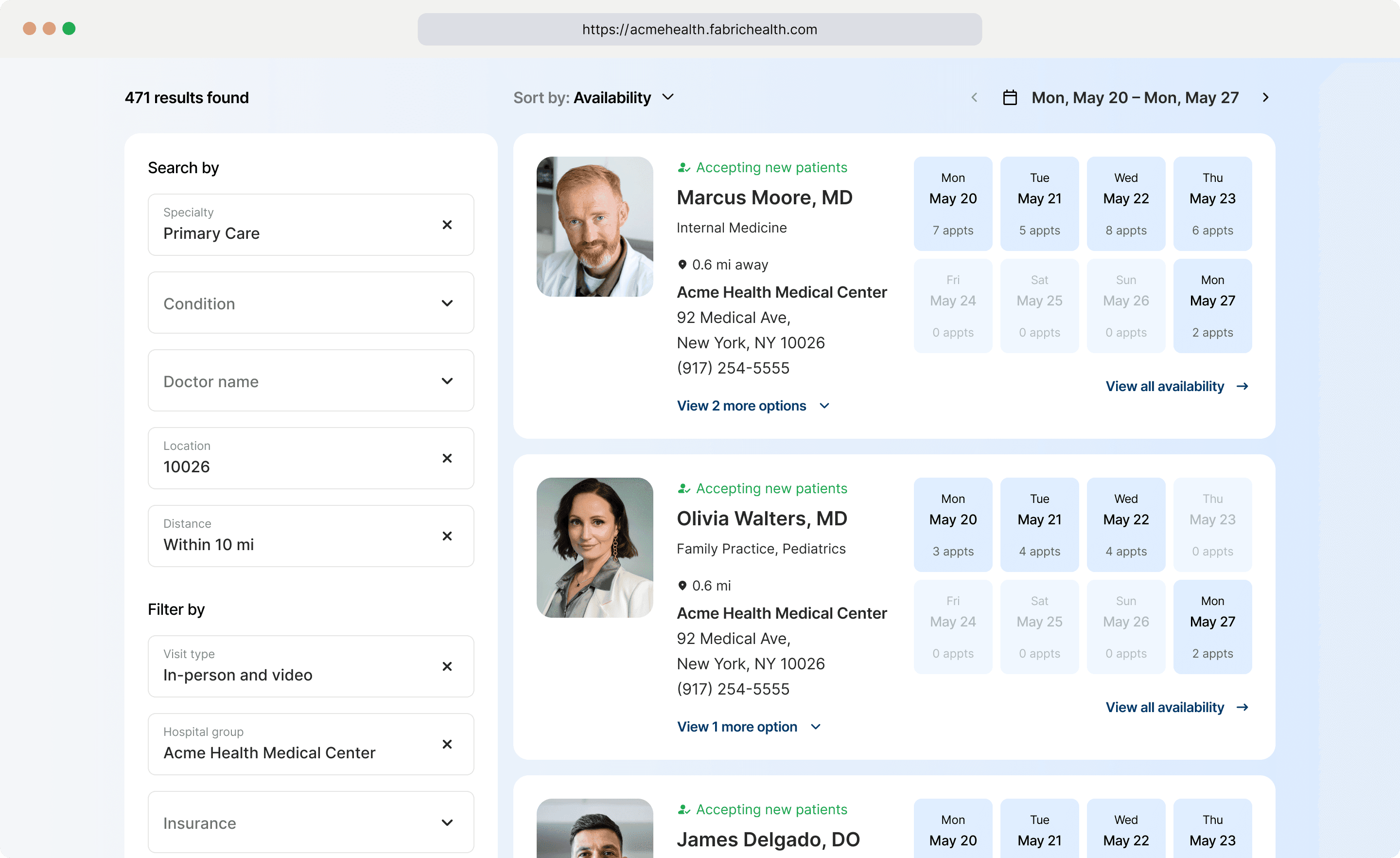
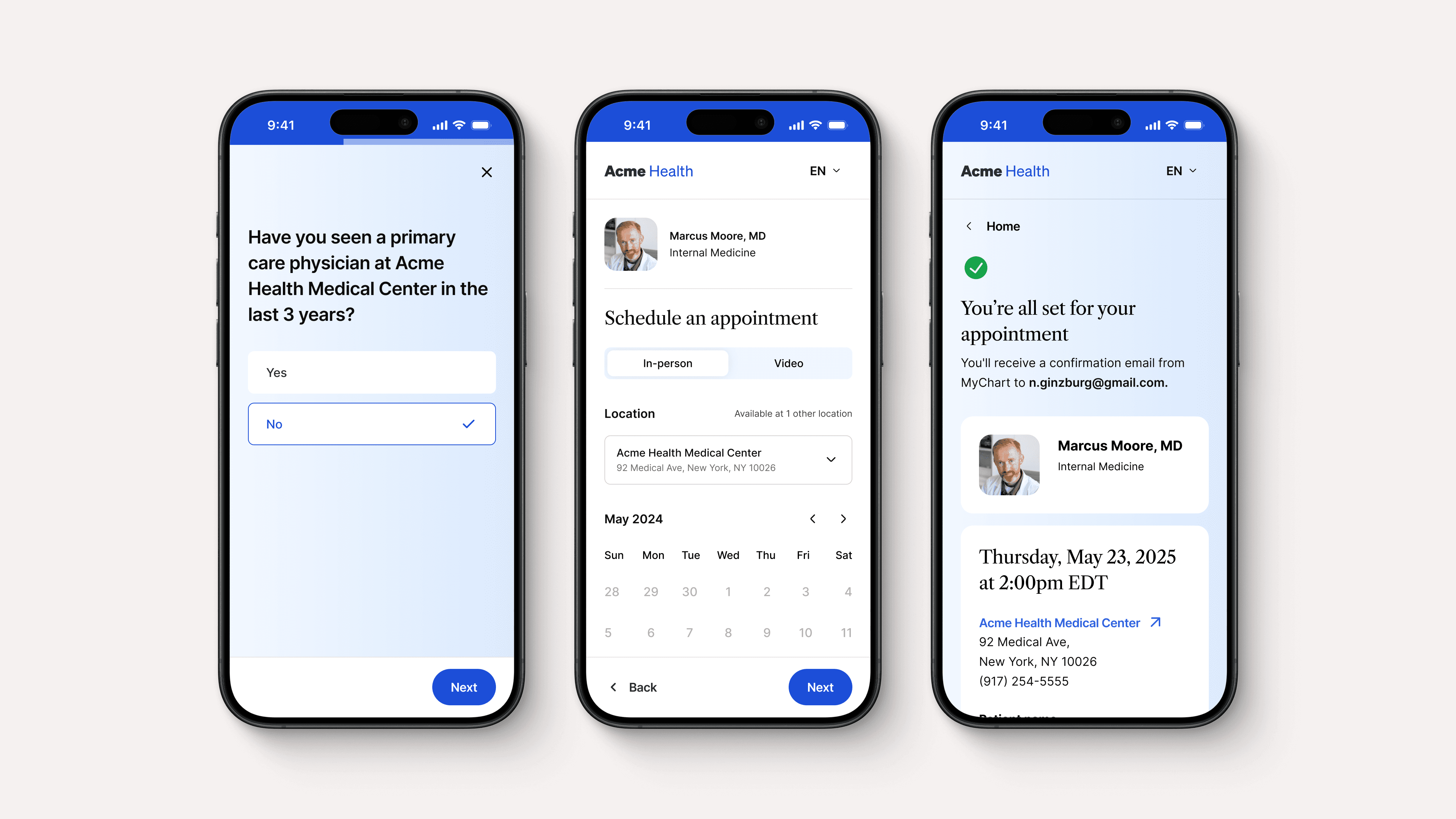
A 0-to-1 product designed in-house, requiring seamless integration with client EHRs. Launched with one of New York's largest health systems, with expansion of white-label capabilities.
The acquisitions introduced significant challenges:
Technical disparity: products were built on incompatible stacks, making backend and frontend unification a monumental task.
User experience fragmentation: patient journeys felt disjointed, particularly for clients using multiple products.
Varying maturity levels: each product had different design foundations, from GYANT's well-developed system to Zipnosis's fragmented components.

/
Solution & Process
(02)
Unified vision and a scalable design system.
Unified vision and scalable design framework
The approach centered on unifying Fabric Health's product suite while enabling scalability for future growth. The solution revolved around two pillars:
Shared product vision: a “north star” aligning teams and stakeholders around a cohesive patient journey, prioritizing seamless transitions across products and scalability for future acquisitions.
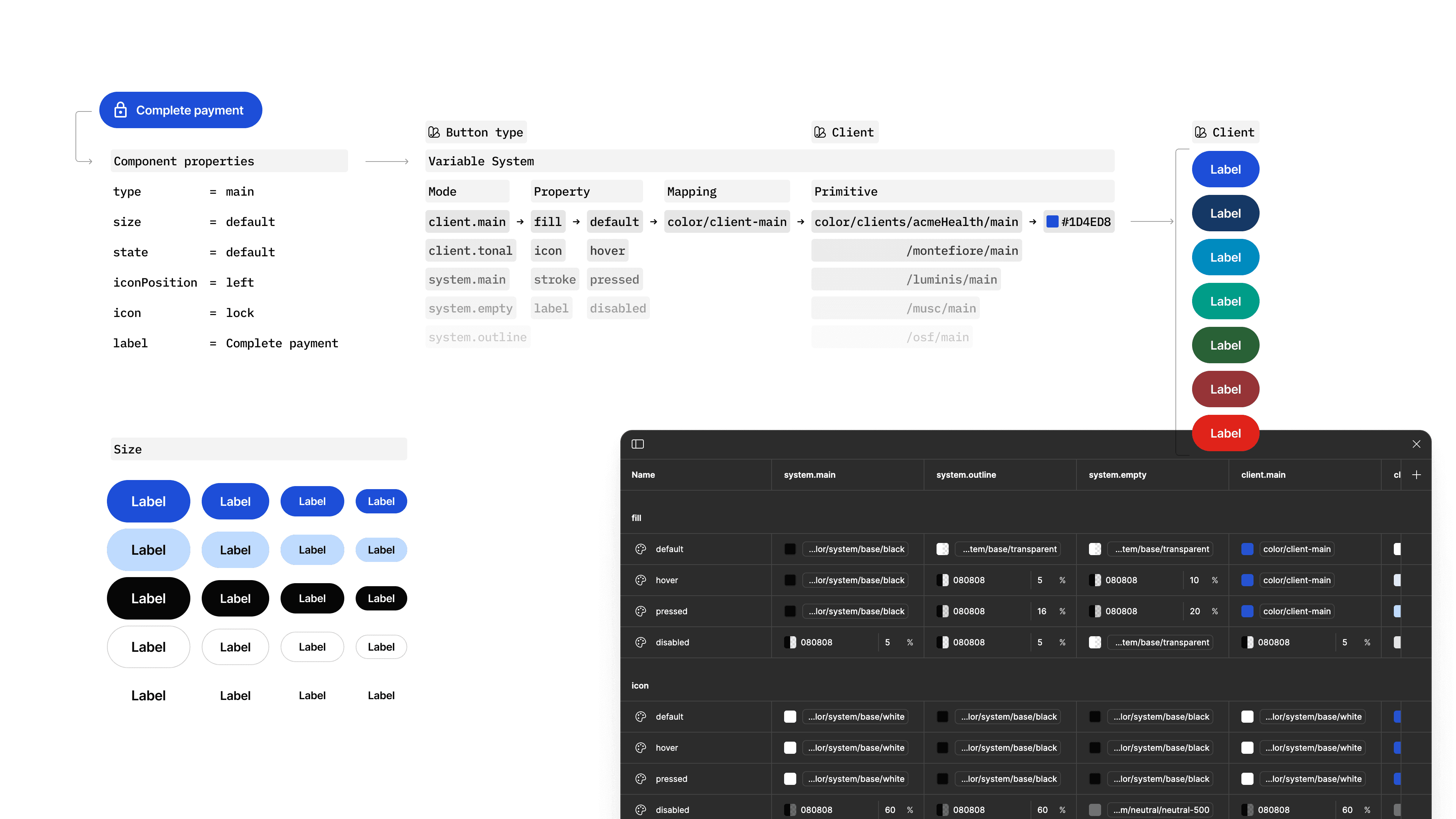
Scalable design system: a centralized system with Figma-based tokens and Storybook libraries, ensuring consistency across styles, components, and patterns while accommodating product-specific requirements.
This strategy laid the groundwork for both immediate improvements and long-term growth.
UX/UI audits and vision alignment
Work began with comprehensive audits of all products, identifying key inconsistencies in workflows, styles, and interaction patterns:
Zipnosis: independent apps for providers and patients required separate audits and targeted UX improvements.
GYANT: preserving its strong accessibility standards while aligning styles with the broader suite was critical.
From these insights, a “north star” product vision was crafted that prioritized seamless cross-product transitions, scalability for future acquisitions, and pragmatic solutions balancing immediate needs with long-term goals.
Developing a scalable design system
The unification effort centered on a design system built to address both immediate needs and future growth:
An automated client-color palette generator ensured white-labeled products met accessibility requirements.
A Figma library of React components gradually aligned disparate tech stacks while maintaining flexibility, complemented by a shared Storybook library across dev teams.
Workflows and tokens were designed to accommodate variations across products while streamlining development cycles.
A new user-testing framework and ongoing provider research (interviews for feature discovery and UX improvements).
UX copy guidelines developed in cross-team collaboration with marketing and clinical.
Designing from 0-to-1: Provider Directory
The Provider Directory & Scheduling product exemplified the collaborative approach:
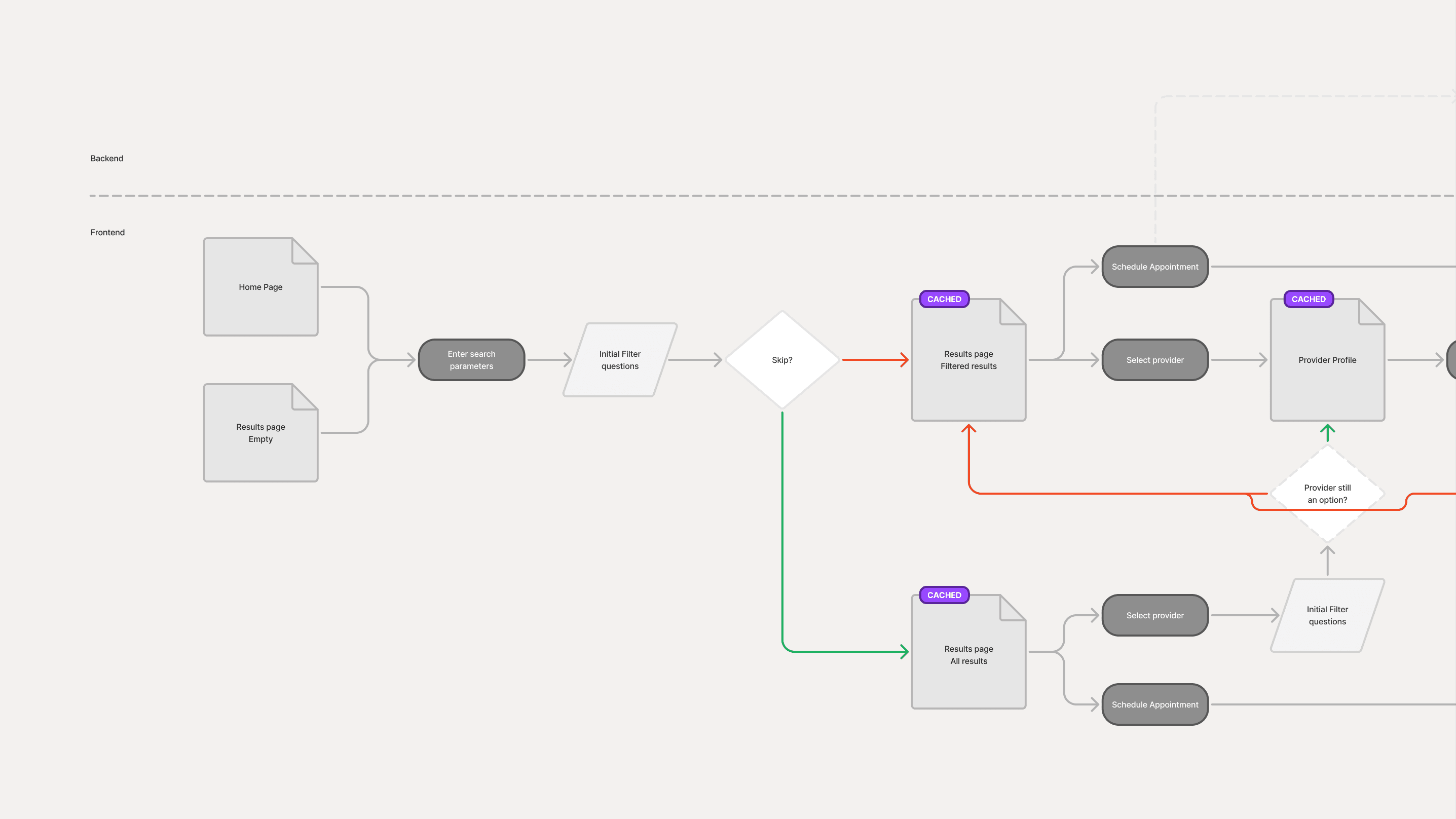
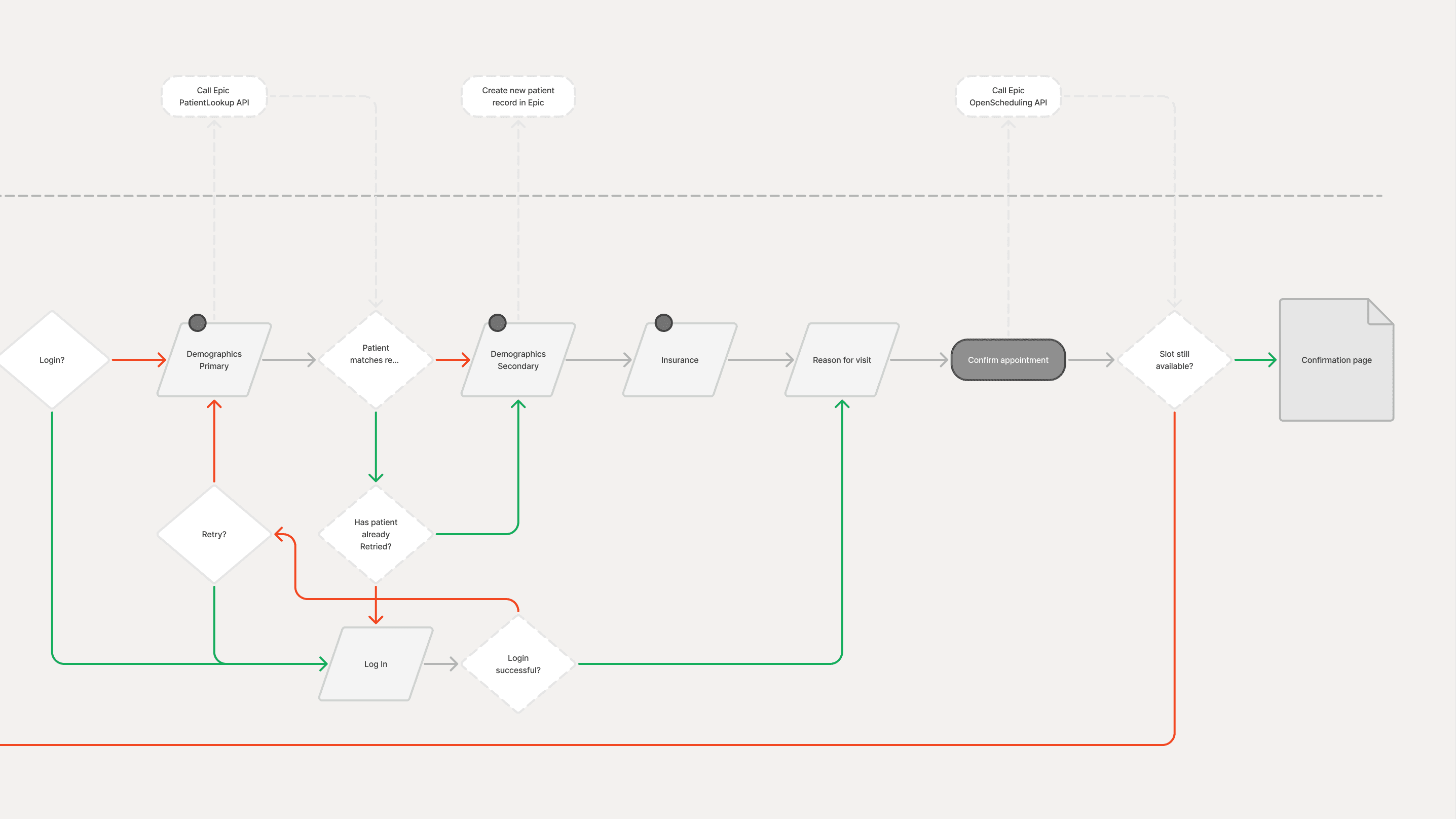
Close work with engineering and client stakeholders addressed technical dependencies and complex workflows (provider search, qualifying questions, scheduling flows).
Iterative usability testing refined UI components, improving perceived ease of use from 4 to 4.5/5 through subtle but impactful changes like modal overlays.
Latest Projects.
© Common Factor
A curated selection of projects that reflect our commitment to simplicity and purposeful design.

